What Is Amateur Radio?
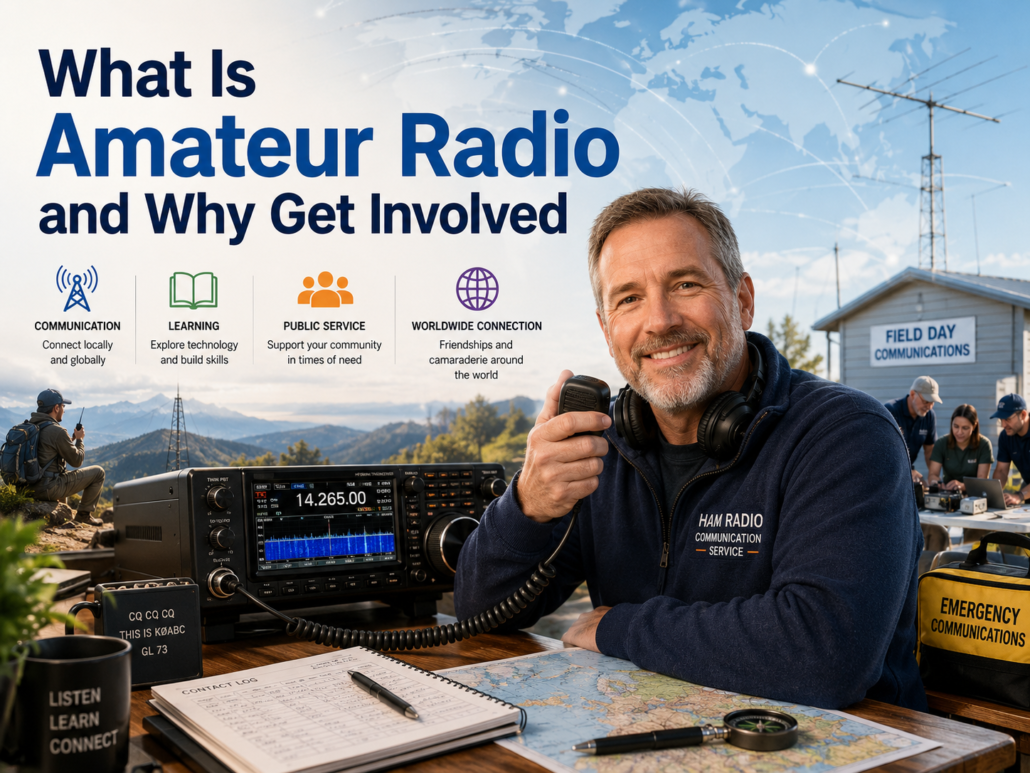
Amateur radio, often called ham radio, is a licensed communications service that allows individuals to communicate locally, nationally, and around the world using radio technology. Amateur radio operators use voice, digital signals, Morse code, satellites, and other methods to contact fellow operators, experiment with electronics, and develop valuable technical skills. In addition to being an enjoyable hobby, amateur radio provides an important public service. Trained operators can support communities during emergencies, disasters, public events, and communications outages when normal telephone or internet systems may be unavailable. Amateur radio brings together people of all ages and backgrounds through a shared interest in communication, technology, learning, friendship, and service.
Why Amateur Radio Matters
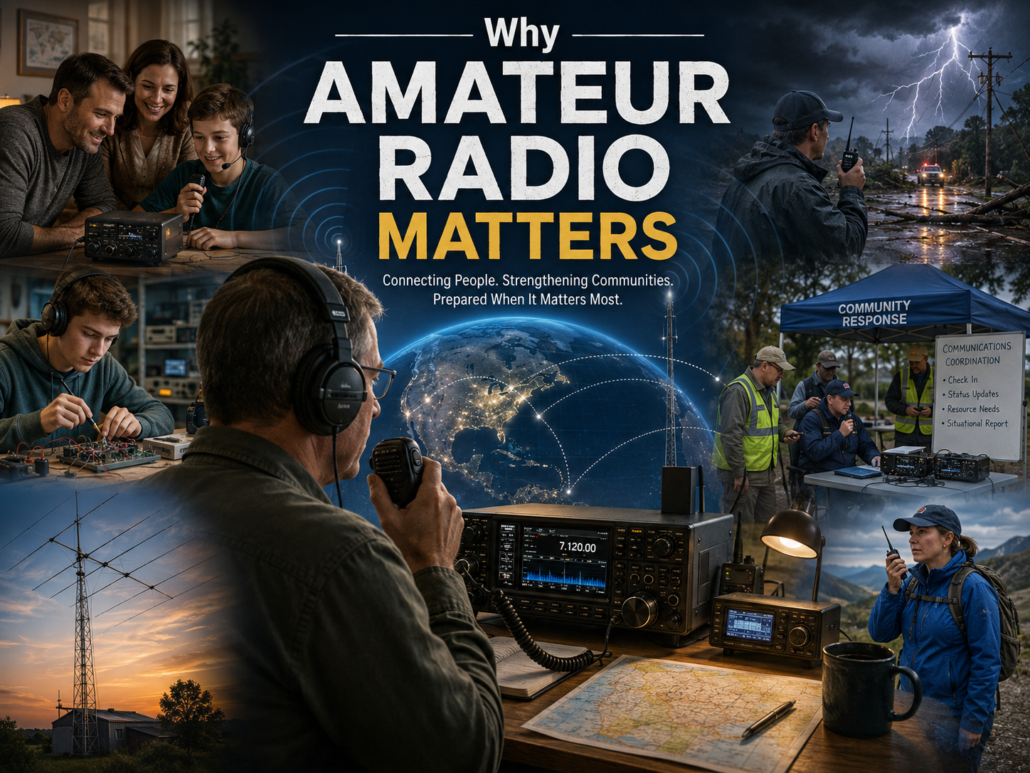
Amateur radio matters because it gives ordinary people the ability to communicate, learn, serve, and remain connected when other systems may fail. For the individual, it builds confidence, technical knowledge, problem-solving ability, and practical emergency skills. For families and communities, it provides a dependable communications resource during storms, disasters, power outages, and other emergencies when telephones, cellular networks, or the internet may be unavailable. Amateur radio also creates friendships, encourages lifelong learning, and gives operators a meaningful way to serve others. It is more than a hobby—it is a personal skill, a public-service resource, and a communications capability that can make a real difference when people need help most.