


WELCOME
Welcome to Amateur Radio Labs, home of WB6MTK—a resource created for amateur radio operators who want to learn more, operate more effectively, and continue growing in the hobby. Whether you are newly licensed, returning to the air after many years, or an experienced operator looking for deeper technical information, this site is designed to help you strengthen your knowledge, improve your station, and explore the many possibilities amateur radio has to offer.
Here you will find practical articles, equipment guidance, antenna and feed-line information, operating tips, emergency communications resources, technical explanations, and ideas for future experimentation. Our goal is to make complex subjects easier to understand while encouraging good operating practices, innovation, community service, and the exchange of knowledge among fellow amateurs. We invite you to explore the site, share what you learn, and continue building the skills that keep amateur radio strong, useful, and relevant.
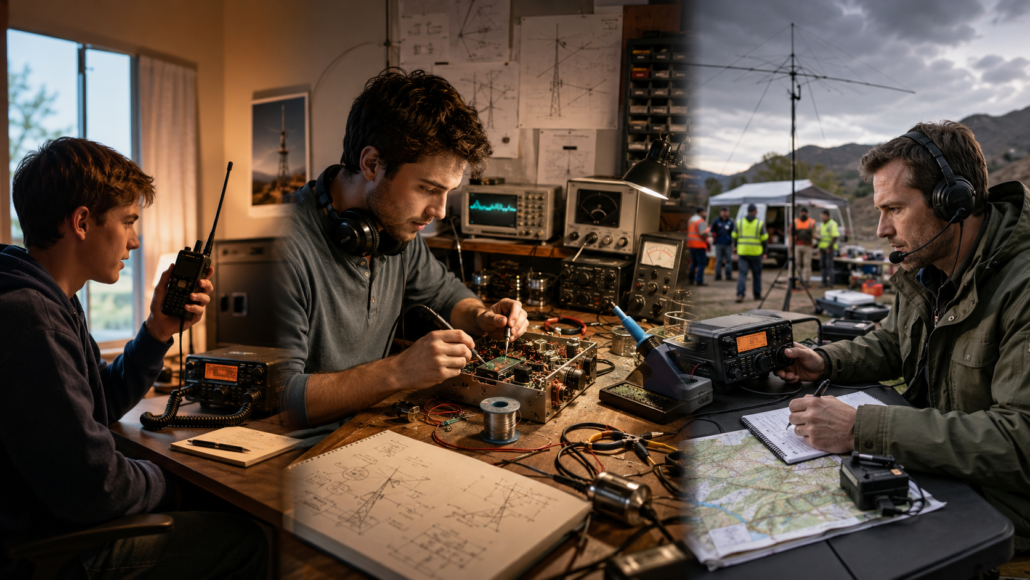
WHAT TYPE OF AMATEUR RADIO OPERATOR ARE YOU AND WHAT ARE YOU BECOMING?
From Button-Pusher to Builder, Communicator, and Community Asset
Amateur radio begins with learning how to operate the equipment, but it should not end there. Every licensed operator has the opportunity to grow from a simple appliance operator into a skilled communicator, experimenter, innovator, and trusted emergency resource. By learning how radios work, building practical systems, improving operating discipline, and preparing for real-world communication failures, amateur radio becomes more than a hobby — it becomes a valuable public service skill.
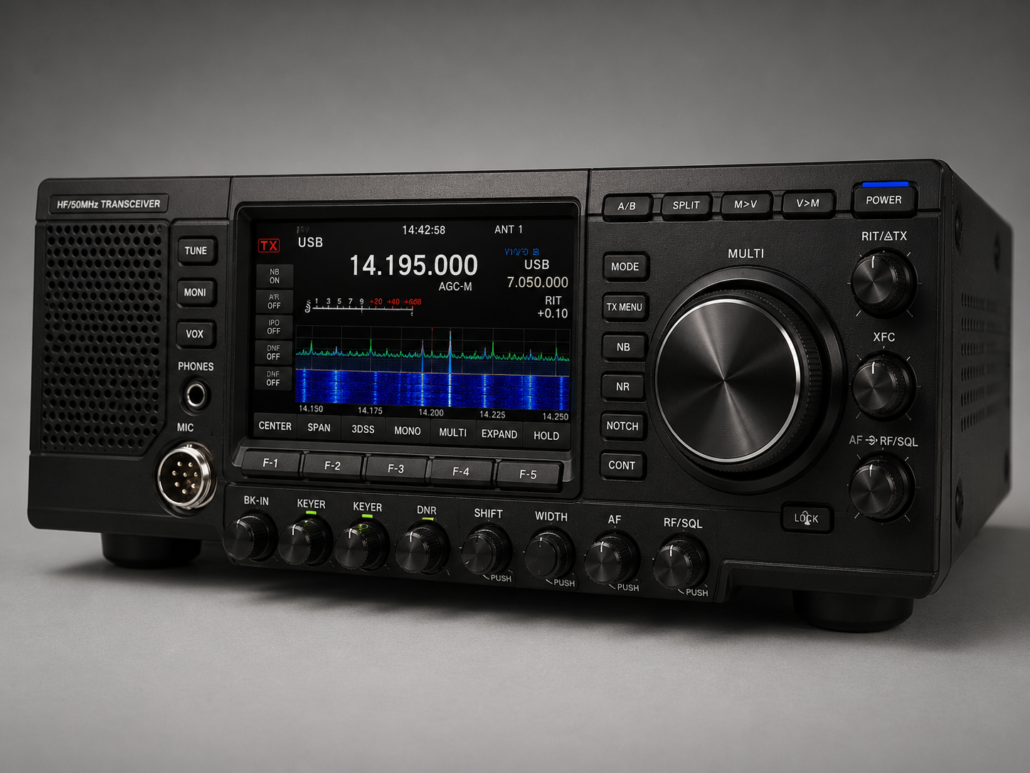
HF TRANSCEIVERS – SELECTION,
PERFORMANCE, AND INTEGRATION
Selecting an HF transceiver requires more than comparing price, brand, or transmit power. The best radio for an amateur station is the one that matches the operator’s mission, antennas, operating style, technical skill, and long-term goals. Receiver performance, filtering, dynamic range, transmit cleanliness, digital-mode support, ergonomics, power requirements, antenna compatibility, grounding, and computer integration all affect real-world performance. Pricing can range from affordable entry-level radios to premium high-performance transceivers, but the smartest investment is a balanced station where the radio, antenna system, power supply, feed line, software, and operator skill work together as one reliable communications system.
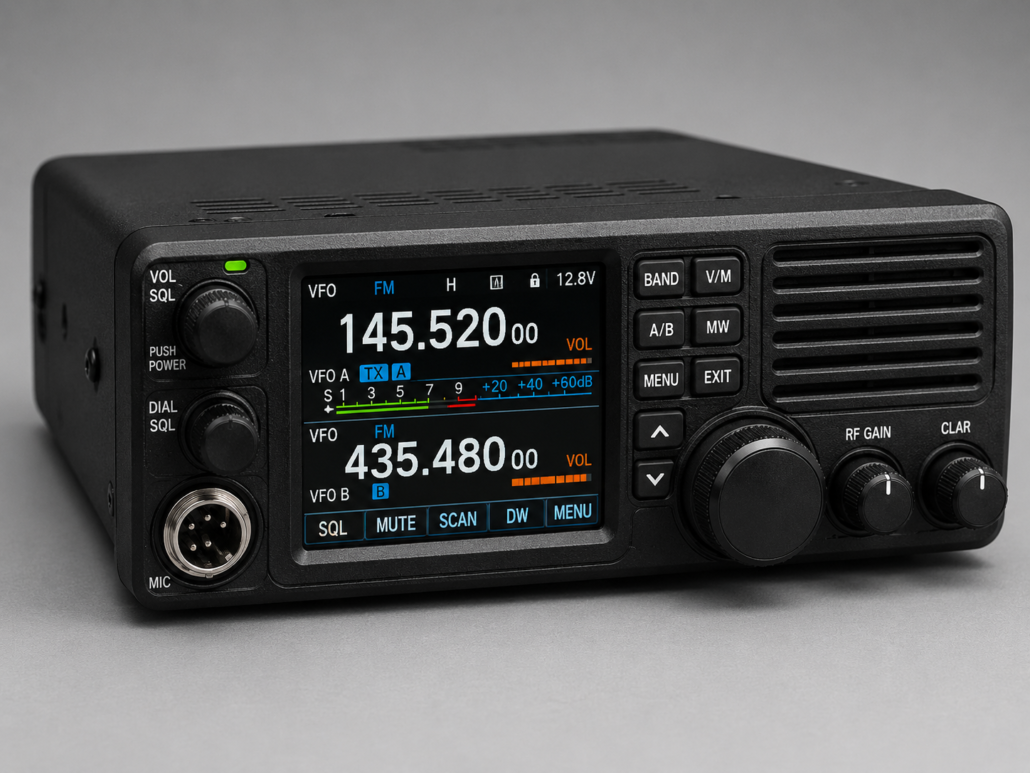
VHF/UHF TRANSCEIVERS – SELECTION,
PERFORMANCE, AND INTEGRATION
A VHF/UHF base station is one of the most practical upgrades an amateur radio operator can make for dependable local and regional communication. Unlike a handheld, a properly installed base station provides better transmit power, clearer receive audio, stronger antenna performance, improved operating comfort, and greater reliability for repeaters, simplex channels, emergency nets, public service events, APRS, packet, and digital voice systems. The best choice depends on the operator’s mission, local repeater activity, antenna location, power system, digital needs, and future goals. For most operators, a reliable dual-band FM mobile radio used as a base station, combined with a quality outdoor antenna, low-loss coax, clean power supply, proper grounding, and organized memory programming, will provide excellent performance. When upgrading, the first step should be identifying the weakest part of the current station, which may be the antenna, feed line, receiver quality, audio, power backup, programming, or lack of digital capability. A well-planned VHF/UHF base station becomes a dependable communications center for everyday amateur radio, emergency operations, public service, and long-term station growth.
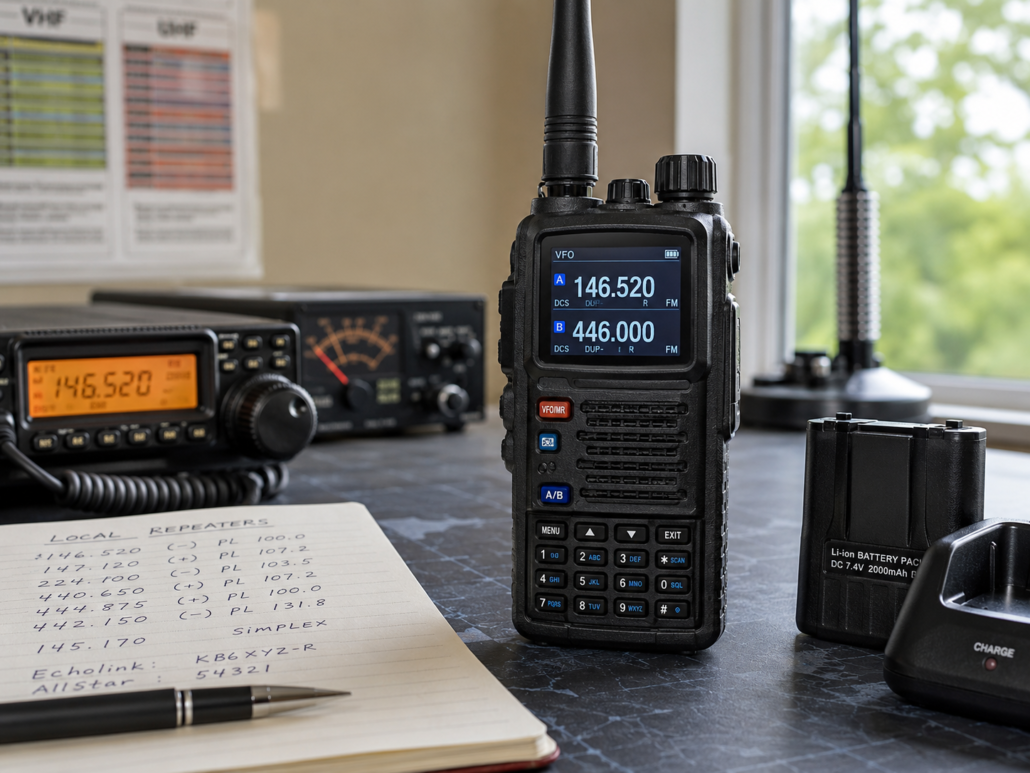
CHOOSING YOUR NEW HANDHELD OR UPGRADING
Choosing your first or upgraded VHF/UHF handheld radio requires more than comparing price, transmit power, or the number of features on the box. A good handheld should match the operator’s real operating needs, including local repeater access, simplex communication, emergency preparedness, public service events, digital voice operation, APRS, or field deployment. The most important factors include dual-band 2-meter and 70-centimeter coverage, receiver quality, clear transmit and receive audio, battery life, programming ease, antenna options, ruggedness, charging flexibility, and accessory support. For most new amateur radio operators, a dependable dual-band analog FM handheld is the best starting point because it teaches the fundamentals without unnecessary complexity. For operators upgrading from a basic radio, the best choice is the one that solves a specific weakness, such as poor audio, limited battery options, weak receiver performance, lack of digital capability, or inadequate field durability. A well-chosen handheld becomes more than a convenience radio; it becomes a practical communications tool for everyday amateur radio, emergency service, and reliable local communication.
ANTENNAS MATTER
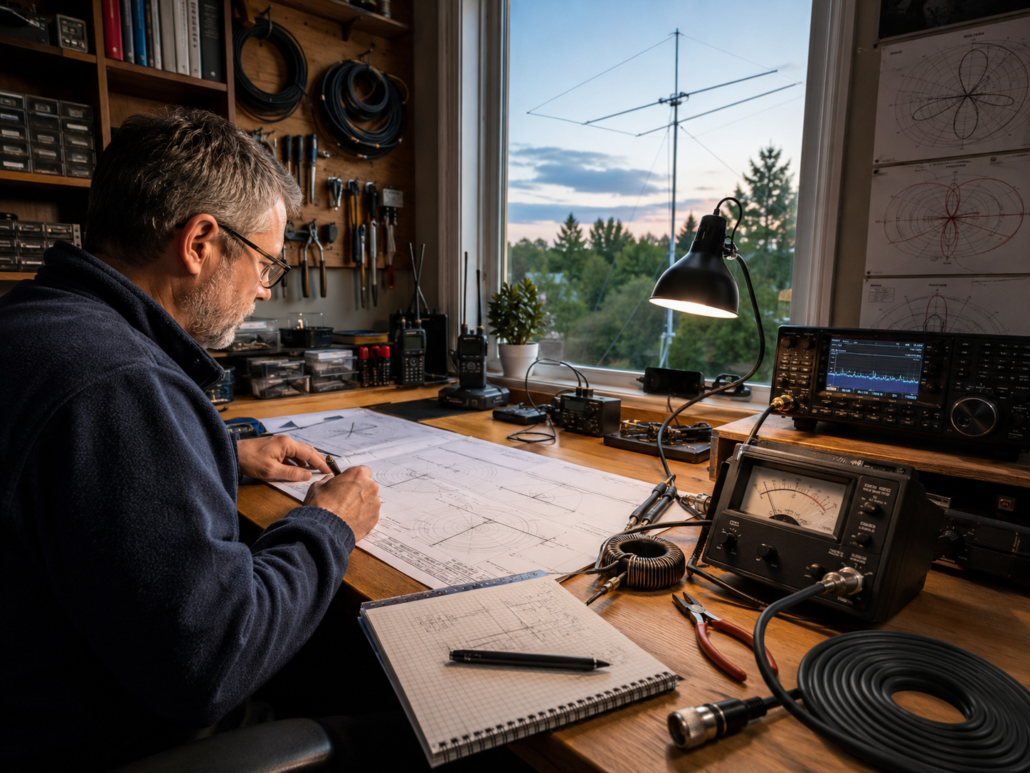
Good antenna design is one of the most important parts of a successful amateur radio station because it determines how well your signal is transmitted, how clearly you receive, how much local noise enters the system, and how reliable your communications will be during normal use or emergencies. A poor antenna system can make an expensive radio perform badly, while a well-designed antenna can make modest equipment highly effective. Understanding antenna efficiency, placement, feed line loss, grounding, common-mode current, radiation pattern, safety, and mission purpose is not optional for serious operators; it is the difference between simply owning radio equipment and becoming a capable communicator.
Antenna Coaxial and Various Feedlines
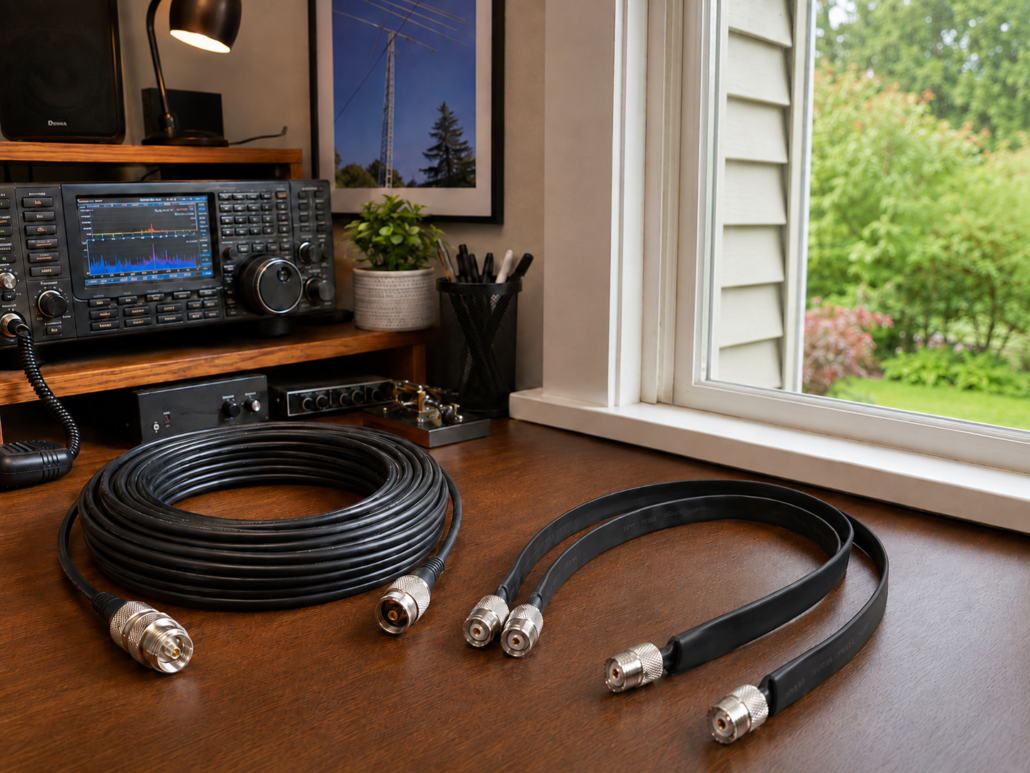
Feed lines are a critical part of every amateur radio station because they determine how much signal and power actually moves between the radio and the antenna. Coaxial cable is the most common choice because it is convenient, shielded, and compatible with modern 50-ohm radio equipment, but the correct type must be selected for the band, power level, cable length, and installation conditions. Ladder line and open-wire line can provide excellent HF efficiency, especially with multiband wire antennas, but they require careful routing and proper matching. Window feed-throughs provide a practical no-drill solution for bringing antenna lines indoors through a window, making them useful for renters, HOA-restricted homes, temporary setups, and emergency stations. The best installation uses quality cable, proper connectors, weatherproofing, strain relief, grounding, and lightning protection.
ANTENNA ANALYZER
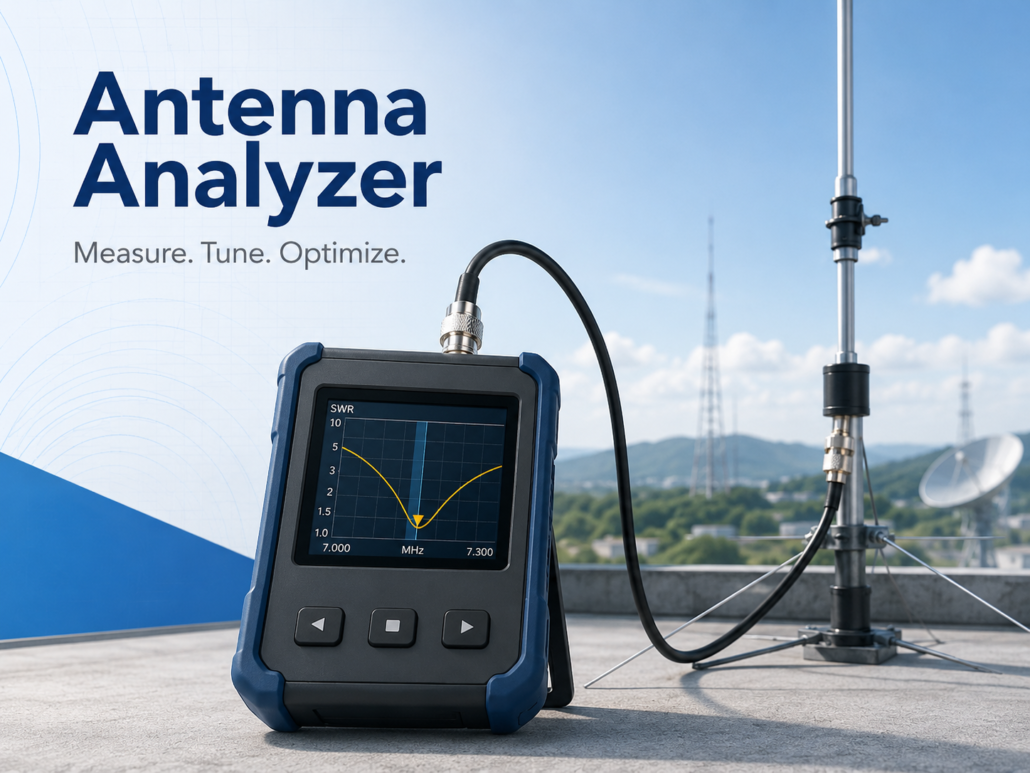
An antenna analyzer is an essential tool for measuring and understanding your antenna system. It helps you achieve the best SWR, match impedance, reduce losses, and improve overall performance. By using accurate data, you can fine-tune your antenna for more efficient and reliable communications on every band.
CHOOSING THE RIGHT ANTENNA TUNER FOR HF
AND A SHORT LESSON ON WHAT THEY ACTUALLY DO.
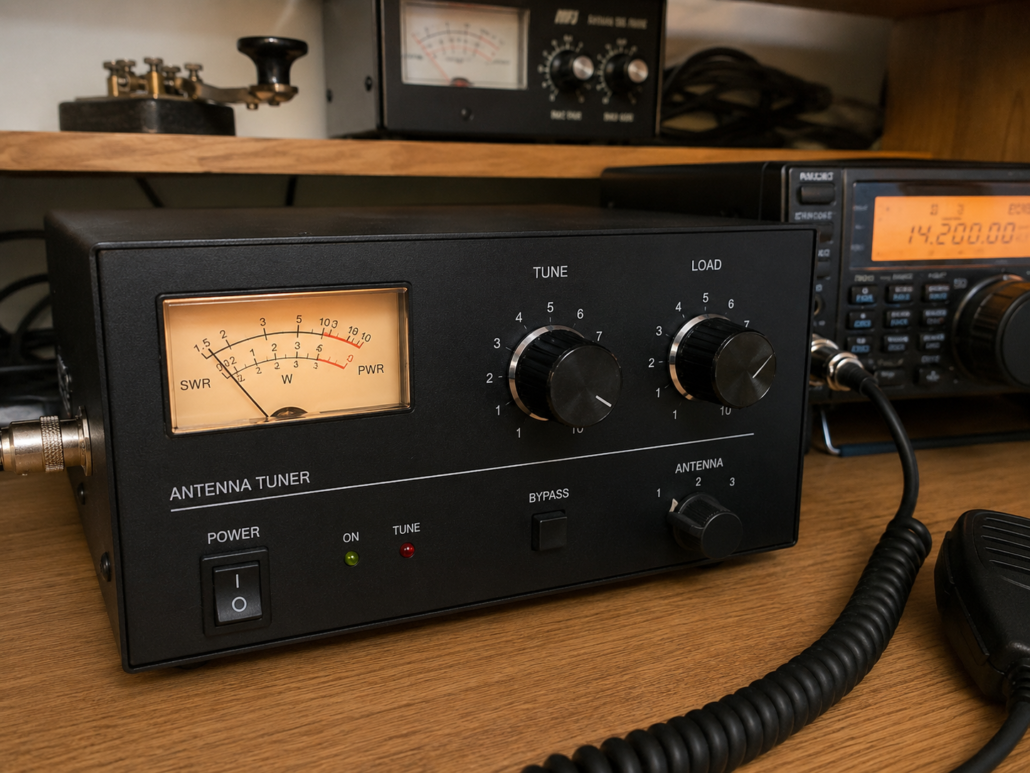
Antenna tuners are often misunderstood as devices that “tune the antenna,” but their real function is to match the impedance of the antenna system to the 50-ohm load expected by the transmitter. A tuner helps protect the radio, reduce transmitter foldback, and allow operation across wider portions of the HF bands, especially when using multiband, non-resonant, end-fed, vertical, random-wire, or ladder-line-fed antennas. However, a tuner does not make a poor antenna efficient, eliminate feed-line loss, fix grounding problems, or guarantee strong radiation. The most important features to look for include adequate power handling, wide matching range, accurate SWR and power metering, a true bypass switch, quality components, low-loss design, support for balanced line when needed, memory tuning for automatic tuners, and enough duty-cycle margin for digital modes. A good antenna tuner is a valuable station tool, but it works best when paired with proper antenna design, good feed line, effective grounding or counterpoise systems, and a clear understanding that low SWR does not always mean good signal performance.
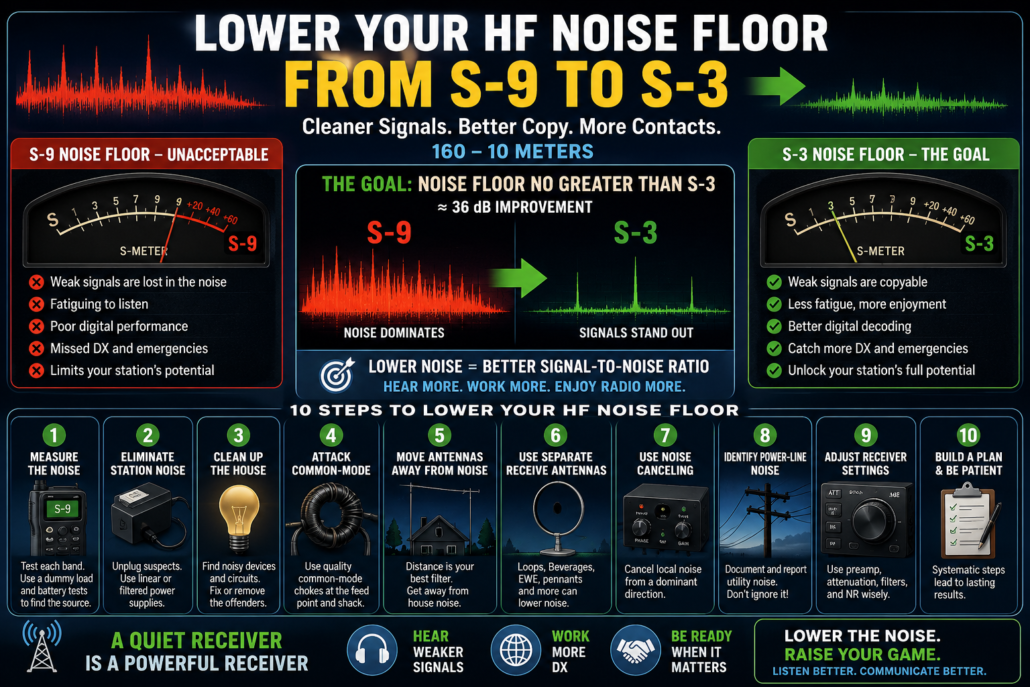
LOWERING YOUR NOISE FLOOR
Why is an S-9 noise floor on the HF bands from 160 through 10 meters unacceptable? The expanded article provides a practical path toward reducing it to about S-3. It emphasizes that lowering noise is not a simple radio adjustment, but a station-wide engineering process involving proper measurement, identifying household and station-generated interference, controlling common-mode current, improving antenna placement, using receive-only antennas, and applying receiver settings wisely. The main message is clear: a quiet receiver is one of the most powerful improvements an amateur radio operator can make.
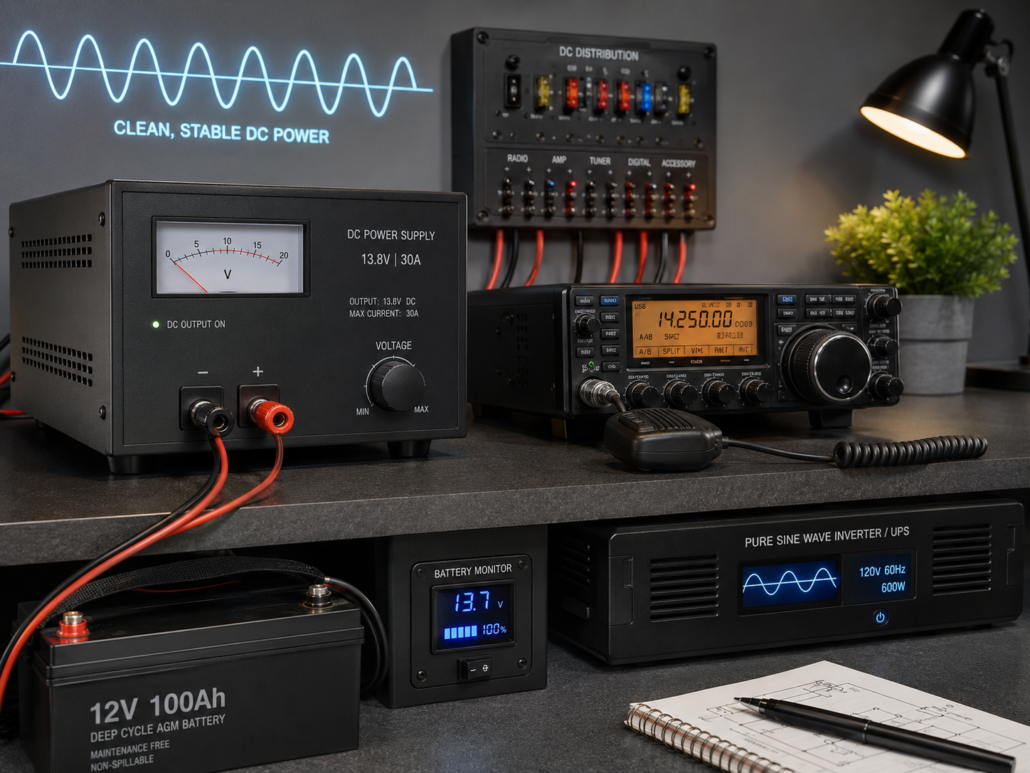
The Right Power Supply Matters
A reliable amateur radio station depends on clean, stable power. The power supply must provide the correct voltage, enough continuous current, low ripple, proper regulation, and protection against faults such as over-voltage, overload, overheating, and short circuits. Poor power can raise the receiver noise floor, distort transmitted audio, cause radio resets, interfere with digital modes, and reduce overall station reliability. While radios usually operate from 13.8 volts DC, many stations also use AC backup sources such as inverters, UPS units, or generators. When AC power is needed, a pure sine wave source is preferred because it more closely matches utility power, reduces electrical noise, protects sensitive electronics, improves charger and power supply performance, and helps prevent interference. For emergency communications, direct DC battery operation is often the most efficient method for radios, while pure sine wave AC should be used for computers, chargers, monitors, and other accessories. Clean power is not optional; it is a critical part of station performance, equipment protection, and emergency readiness.
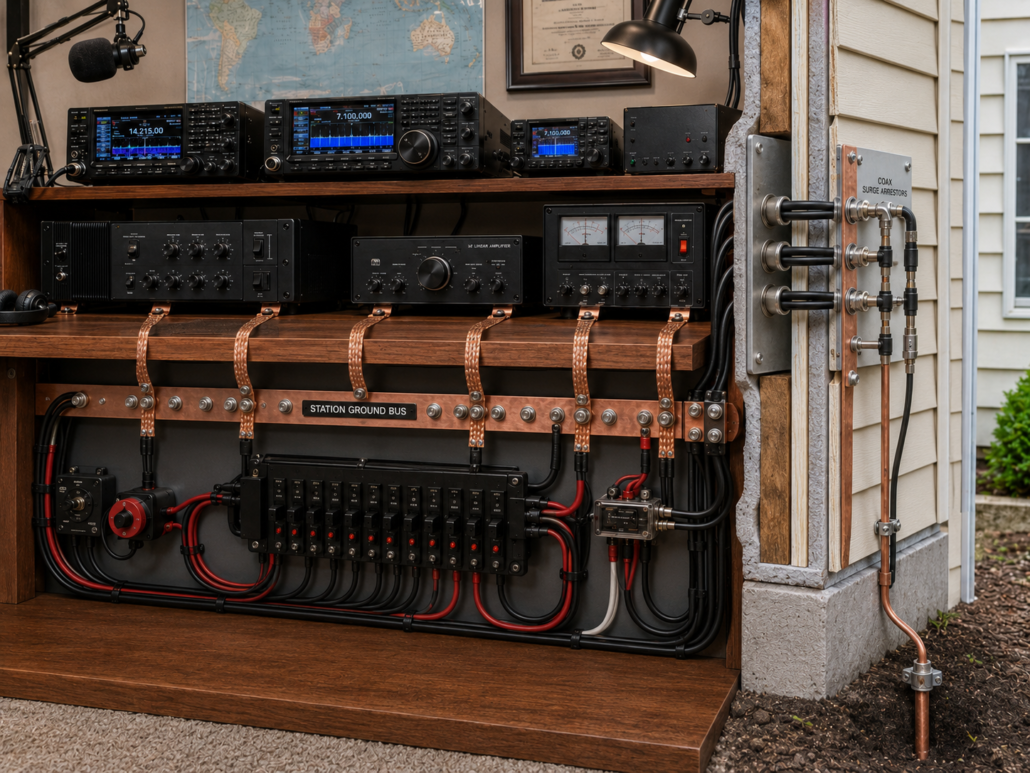
Grounding Matters For Safety,
But Also Allowing Your Station To Communicate
NOTE: This image is over-illustrated to point out the need for grounding all devices when possible.
Proper shack grounding is not simply adding a ground rod or running random wires behind the operating desk. A safe and effective amateur radio station requires a complete grounding and bonding system that ties equipment chassis, power supplies, coax shields, surge protectors, antenna entry panels, and the building’s electrical ground into a single system. Correct bonding helps reduce shock hazards, RF feedback, noise, equipment damage, and lightning-related surge risk. The article also explains that power wiring must be sized according to current load, cable length, voltage drop, and fuse protection. Undersized DC power cables can cause poor transmitter performance, overheating, nuisance shutdowns, and safety hazards. By using proper copper bonding straps, a station ground bus, coax surge protection, a correctly sized power cable, and source-side fusing, the amateur radio operator builds a cleaner, safer, more reliable, and more professional station.




The social media section is in the midst of an upgrade and expansion.
