
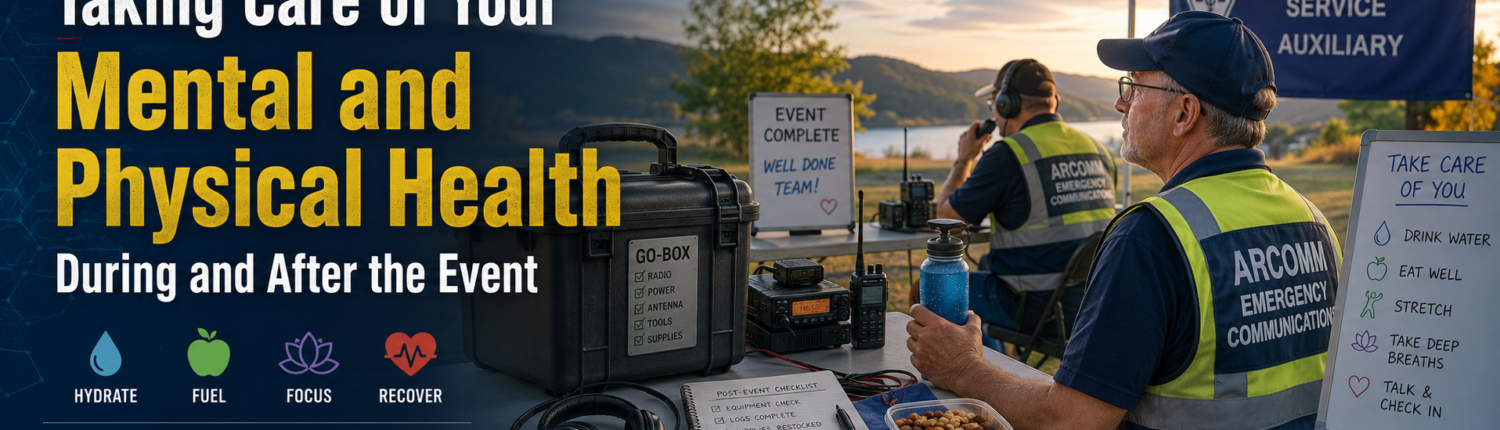
Taking Care of Your Mental and Physical Health During and After an Emergency Event
The Operator Is Part of the Communications System
Emergency communicators frequently spend considerable time preparing radios, antennas, batteries, portable power systems, message forms, computers, and deployment kits. However, one critical component is sometimes overlooked: the operator.
A communications station cannot remain effective when the person operating it is exhausted, dehydrated, hungry, emotionally overwhelmed, or physically injured. Even excellent equipment cannot compensate for an operator whose concentration and judgment have deteriorated.
Personal health must therefore be treated as an operational requirement. Rest, hydration, nutrition, sanitation, emotional stability, and personal safety are not conveniences. They are necessary parts of maintaining a reliable communications capability.
A responsible communicator must be prepared not only to deploy, but also to remain healthy throughout the event and recover properly afterward.
Emergency Events Place Unusual Demands on the Body
Emergency operations can be physically demanding even when the operator is seated at a radio. The body may be affected by:
- Long periods without adequate sleep
- Extended sitting or standing
- Exposure to heat, cold, wind, rain, or smoke
- Poor-quality meals or missed meals
- Dehydration
- Repeated lifting and movement of equipment
- Limited restroom access
- Medication schedules being disrupted
- Loud, crowded, or uncomfortable working conditions
- Increased stress hormones caused by uncertainty and responsibility
These conditions can develop gradually. An operator may initially feel capable but become less effective as the hours continue. Fatigue can impair reaction time, memory, patience, coordination, and decision-making.
The operator may begin to copy messages incorrectly, forget instructions, overlook hazards, become unusually irritable, or make poor technical decisions. These are not merely personal concerns. They can affect the entire communications operation.
Hydration Must Be Maintained
Dehydration is one of the most common and preventable problems during field operations. Operators may become so focused on radio traffic that they forget to drink. Others may intentionally limit fluids because restroom access is inconvenient.
This is a serious mistake.
Even moderate dehydration may contribute to headaches, dizziness, weakness, confusion, muscle cramps, and reduced concentration. Heat, low humidity, physical exertion, caffeine, and certain medications can increase fluid loss.
Operators should carry an adequate supply of drinking water and consume it regularly rather than waiting until they feel extremely thirsty. Electrolyte beverages may be helpful during prolonged work in hot conditions or when heavy sweating occurs, but they should not completely replace water.
Excessive caffeine and highly caffeinated energy drinks should be used cautiously. They may create a temporary feeling of alertness without correcting the underlying need for sleep and recovery. Too much caffeine can also contribute to nervousness, rapid heartbeat, stomach discomfort, and difficulty sleeping when a rest opportunity becomes available.
Eat for Sustained Performance
Emergency operations are not the time to depend entirely on candy, pastries, chips, or energy drinks. These items may provide quick calories, but they often do not support sustained mental and physical performance.
A deployment food supply should include simple, durable foods that provide protein, complex carbohydrates, and healthy fats. Suitable options may include:
- Nuts or trail mix
- Protein bars
- Peanut butter
- Whole-grain crackers
- Shelf-stable tuna or chicken
- Dried fruit
- Ready-to-eat meals
- Low-sugar snack bars
- Fresh fruit when available
Operators with diabetes, food allergies, or other dietary requirements must prepare carefully. They should not assume that appropriate food will be available at the incident location.
Eating smaller amounts at regular intervals may be more practical than waiting for a large meal. The goal is to maintain stable energy, concentration, and physical strength throughout the assignment.
Protect Your Sleep and Rest Cycle
Sleep deprivation is a major threat to operational accuracy. After long periods without sleep, an operator may believe that he or she is functioning normally while actual performance has significantly declined.
Fatigue can cause:
- Incorrectly copied call signs or message numbers
- Missed radio calls
- Slow responses
- Poor judgment
- Short-term memory problems
- Irritability
- Reduced situational awareness
- Improper equipment connections
- Unsafe driving
- Difficulty following procedures
No emergency communicator should assume that dedication means operating indefinitely without rest. A properly managed communications operation uses shifts, relief operators, and scheduled breaks.
The ideal shift length will depend on the conditions, workload, staffing, and complexity of the assignment. A quiet monitoring position may be sustainable longer than a high-volume tactical net. Nevertheless, every assignment must include realistic opportunities for rest.
Before beginning a shift, operators should know:
- Who will relieve them
- When the relief is expected
- Where they may rest
- How urgent traffic will be handled during the transition
- Who has authority to modify the schedule
A formal shift change should include a clear briefing. The incoming operator should receive current frequencies, active assignments, pending messages, equipment concerns, net conditions, and relevant safety information.
Move, Stretch, and Protect Your Body
Communicators may remain in one position for hours while concentrating on the radio. Prolonged sitting can contribute to back pain, joint stiffness, swelling, circulation problems, and reduced alertness.
At reasonable intervals, operators should stand, stretch, walk briefly, and adjust their position. Radios, computers, microphones, message forms, and displays should be arranged to reduce repetitive strain.
Portable stations should also be designed with ergonomics in mind. A folding table that is too low, an uncomfortable chair, poor lighting, or an awkward microphone location can become a serious problem during a long operation.
When moving batteries, generators, antenna supports, or equipment cases, operators should use proper lifting techniques and ask for assistance when necessary. Pride should never take priority over preventing injury.
Maintain Personal Hygiene and Sanitation
Emergency environments may have limited access to clean water, showers, toilets, and waste disposal. Poor sanitation can quickly affect health and morale.
A personal deployment kit should include basic hygiene supplies such as:
- Hand sanitizer
- Soap
- Moist wipes
- Toilet paper
- Tissues
- Toothbrush and toothpaste
- Personal medications
- Sunscreen
- Insect repellent
- Spare clothing
- Appropriate protective equipment
Hands should be cleaned before eating and after using restroom facilities, handling waste, or working around shared equipment.
Microphones, keyboards, telephones, headsets, and other commonly touched equipment may be used by several operators. Reasonable cleaning practices can reduce the spread of illness within the communications team.
Continue Taking Prescribed Medications
Operators who require medication must plan for more than the expected duration of the assignment. Emergency operations may last longer than anticipated, travel routes may be blocked, and pharmacies may be closed.
Medications should remain properly labeled and protected from heat, moisture, freezing, or direct sunlight. Operators should understand any storage limitations associated with their prescriptions.
A communicator should never stop taking prescribed medication merely to remain on assignment. Health conditions that require regular monitoring, food, medication, or medical equipment must be incorporated into the deployment plan.
Operators should also be honest with leadership about functional limitations that affect safety. They do not necessarily need to disclose every private medical detail, but they should communicate any limitation that may affect assignment duration, mobility, lifting, driving, or exposure to environmental conditions.
Understand the Mental Demands of Emergency Communications
Emergency communicators may hear distressing information long before the general public receives it. They may handle reports involving injuries, missing people, fires, damaged neighborhoods, overwhelmed families, or fatalities.
Even when operators are not physically present at the scene, repeated exposure to urgent and emotional traffic can have a psychological effect.
Stress responses may include:
- Anxiety
- Irritability
- Emotional numbness
- Difficulty concentrating
- Trembling or rapid heartbeat
- Headaches
- Digestive discomfort
- Unusual sadness
- Feelings of helplessness
- Anger
- Trouble sleeping
- Repeated thoughts about the event
These reactions do not automatically mean that an operator is weak or unable to serve. They may be normal responses to an abnormal and demanding situation.
The important issue is whether the operator recognizes the signs and responds appropriately.
Use the Buddy System
Team members should watch for changes in one another. A person under significant stress may not recognize the decline in his or her own performance.
Possible warning signs include:
- Repeated procedural mistakes
- Confusion about simple instructions
- Uncharacteristic anger
- Withdrawal from the team
- Excessive talking or emotional agitation
- Shaking
- Reckless decisions
- Refusal to eat, drink, or rest
- Falling asleep at the operating position
- Appearing disoriented
- Becoming fixated on a distressing message
When these signs appear, the operator should be relieved respectfully and without embarrassment. The goal is not punishment. The goal is to protect the operator and preserve the integrity of the communications system.
A good team culture makes it acceptable to say, “I need a break,” before a serious error occurs.
Do Not Carry Every Problem Personally
Emergency communicators provide an essential service, but they cannot personally solve every problem reported over the radio.
An operator may relay a request for medical assistance, shelter, food, transportation, or welfare support. Once that message has been properly transmitted to the appropriate authority, the communicator has completed an important part of the assignment.
Operators must avoid assuming personal responsibility for outcomes outside their control. They should remain compassionate without becoming emotionally consumed by every situation.
The communicator’s role is to provide accurate, timely, disciplined communications. Staying within that role helps protect emotional health and prevents confusion within the incident organization.
Maintain Professional Boundaries
Stress can lead people to speak more freely than they normally would. Operators must continue to protect personal information, sensitive operational details, and the dignity of individuals affected by the event.
Disturbing messages should not become stories shared for entertainment after the shift. Photographs, recordings, message forms, and personal details should be handled according to organizational policies and applicable laws.
Professional boundaries protect both the affected public and the operator. Repeatedly retelling graphic or emotional details can also intensify the operator’s own stress response.
Know When to Step Away
An operator should request relief when physical or mental conditions begin affecting safe performance.
Reasons to step away may include:
- Dizziness or weakness
- Chest pain
- Shortness of breath
- Confusion
- Severe headache
- Repeated communication errors
- Uncontrolled shaking
- Emotional distress
- Inability to remain awake
- Unsafe anger or agitation
- Symptoms of heat illness
- A medical condition that requires attention
Some symptoms may indicate a medical emergency. Chest pain, severe breathing difficulty, fainting, sudden confusion, signs of stroke, or other serious symptoms require immediate medical evaluation.
No communications assignment is more important than protecting life and health.
Transitioning Out of the Operation
When an operator’s assignment ends, the transition should be deliberate. The operator should not simply disconnect the radio and immediately drive a long distance while exhausted.
Before leaving, the operator should:
- Complete a proper shift turnover.
- Account for messages, equipment, and assigned materials.
- Report any operational or safety concerns.
- Drink water and eat if needed.
- Evaluate whether it is safe to drive.
- Arrange transportation when fatigue is significant.
- Confirm any follow-up responsibilities.
An exhausted operator behind the wheel may be a greater danger than an operator who remains at the site long enough to rest.
Mental Health After the Event
Stress reactions may not appear until the emergency is over. During the operation, the operator may remain focused and functional. Once normal activity resumes, emotions and memories may become more noticeable.
Possible post-event reactions include:
- Difficulty sleeping
- Vivid dreams or nightmares
- Replaying radio traffic mentally
- Increased irritability
- Fatigue
- Loss of interest in normal activities
- Guilt about not doing more
- Sadness
- Anxiety
- Avoiding radios, news, or reminders of the event
- Feeling disconnected from family or friends
Many of these reactions may improve with rest, normal routines, supportive conversation, exercise, and time. However, persistent or worsening symptoms should not be ignored.
Operators should seek qualified professional assistance when stress reactions interfere with daily life, relationships, sleep, work, or personal safety. Immediate help is necessary when a person is considering self-harm, feels unable to remain safe, or is experiencing a severe emotional crisis.
Seeking help is a responsible action, not a failure of character.
Conduct a Healthy Operational Debrief
A post-event debrief should identify what worked, what failed, and what must be improved. It should not become an opportunity to embarrass individuals or assign blame unfairly.
A productive debrief may examine:
- Staffing levels
- Shift lengths
- Rest opportunities
- Food and water availability
- Equipment performance
- Message accuracy
- Safety concerns
- Training deficiencies
- Emotional stressors
- Transportation problems
- Areas requiring additional support
The debrief should separate technical performance issues from personal attacks. Operators are more likely to report fatigue, stress, and mistakes honestly when they know the information will be used to improve the system rather than punish them.
Rebuild Normal Routines
After the event, operators should gradually return to normal routines. Recovery may include:
- Obtaining adequate sleep
- Resuming normal meals
- Rehydrating
- Returning to appropriate exercise
- Spending time with family and friends
- Cleaning and restoring equipment
- Replacing depleted supplies
- Reviewing lessons learned
- Limiting unnecessary exposure to disturbing media coverage
- Scheduling medical or mental health support when needed
Equipment recovery and personal recovery should receive equal attention. Batteries may need recharging, but so does the operator.
Prepare Health Supplies Before the Next Event
Health protection begins before deployment. Every communicator should include personal sustainment items in the go-kit.
The kit should be appropriate for the operator’s age, medical needs, climate, assignment, and expected deployment period. Useful items may include:
- Water
- Food
- Prescription medications
- Basic first-aid supplies
- Weather-appropriate clothing
- Work gloves
- Eye protection
- Hearing protection
- Hat and sunscreen
- Hygiene supplies
- Dust mask or other approved respiratory protection
- Supportive footwear
- Personal medical information
- Emergency contact information
- A chair or seating solution
- Bedding or rest supplies when appropriate
The operator should periodically inspect these supplies. Food expires, batteries fail, medications change, clothing sizes change, and personal needs evolve.
Leadership Has a Duty of Care
Communications leaders must create an environment in which operators can report fatigue, illness, stress, or limitations without humiliation.
Good leadership includes:
- Establishing reasonable shifts
- Providing relief operators
- Encouraging hydration and meals
- Monitoring environmental hazards
- Planning for sanitation
- Supporting operators after difficult assignments
- Removing unsafe operators from duty respectfully
- Maintaining clear lines of authority
- Preventing harassment or unnecessary conflict
- Referring operators to qualified assistance when appropriate
A leader who demands continuous performance from exhausted volunteers is not demonstrating dedication. That leader is increasing the likelihood of mistakes, injuries, and long-term harm.
Conclusion
Emergency communications is built upon preparedness, discipline, accuracy, and service. Those principles must also apply to the health of the operator.
A communicator who ignores exhaustion, dehydration, illness, or emotional distress may eventually become unable to serve effectively. A communicator who manages personal health, accepts relief, recognizes stress, and completes proper recovery remains dependable for the long term.
The community needs operators who are not only technically capable, but also physically prepared, mentally resilient, and willing to protect their own well-being.
Taking care of yourself during and after an emergency event is not selfish. It is part of responsible service, professional communications, and sustained readiness.
