Serving Your Community
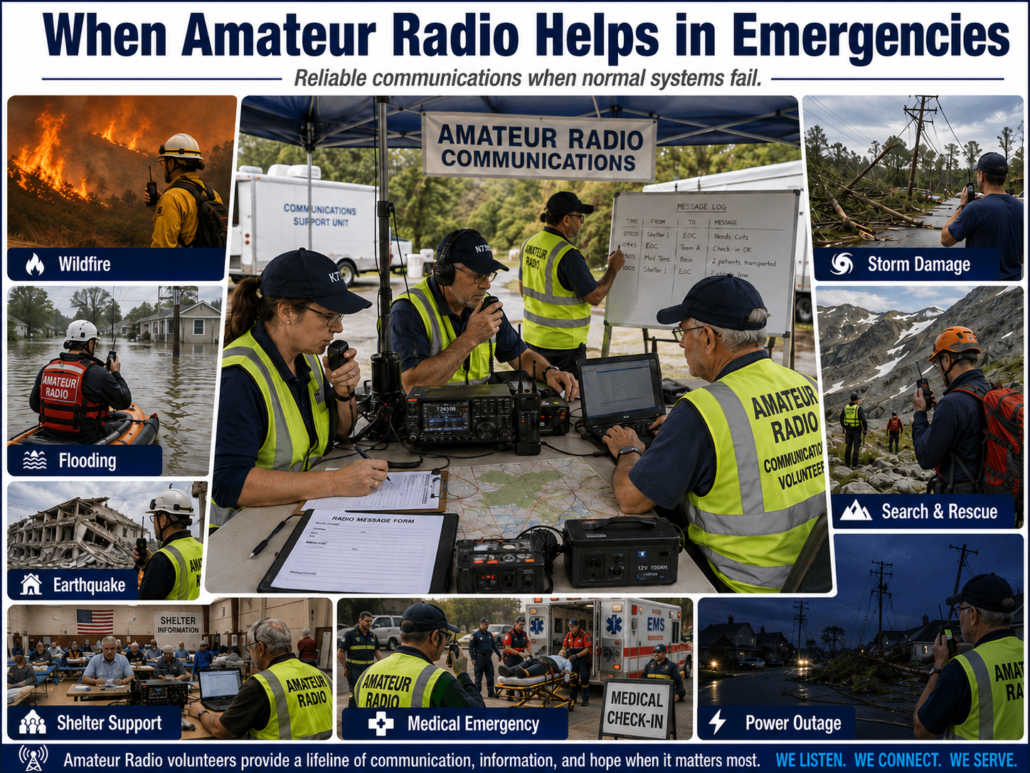
The best way to serve your community as an amateur radio communicator is to prepare before an emergency, train regularly, and become a dependable member of a coordinated communications team. Effective service requires more than owning a radio—it requires technical competence, disciplined operating procedures, accurate message handling, personal reliability, and a willingness to support local emergency management, public-safety organizations, hospitals, shelters, churches, and neighborhood groups. By listening carefully, transmitting only necessary information, maintaining appropriate equipment, and working within an established emergency plan, an amateur radio operator can provide a vital communications link when normal systems are overloaded, damaged, or unavailable.
CHOOSING THE GROUP YOU WISH TO SUPPORT
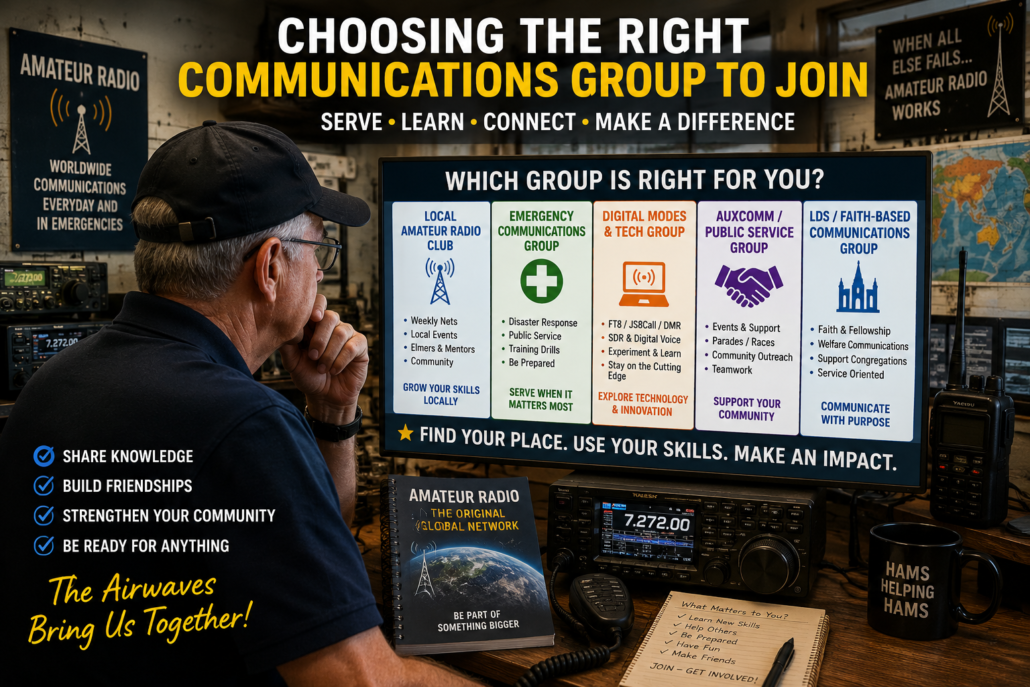
Choosing the right organization to support as an amateur radio communicator begins with understanding your interests, abilities, availability, and your community’s needs. Some operators prefer emergency-management organizations such as ARES or RACES. In contrast, others are better suited to hospitals, shelters, churches, neighborhood preparedness groups, public-service events, or search-and-rescue support. The best choice is a group whose mission you respect, whose training requirements you can meet, and whose operating structure allows you to serve reliably. Rather than joining every available organization, select a primary group, learn its procedures, build relationships with its leaders, and become a dependable communicator who can be trusted when communications are needed most.
TRAINING IS VITAL TO SUCCESS
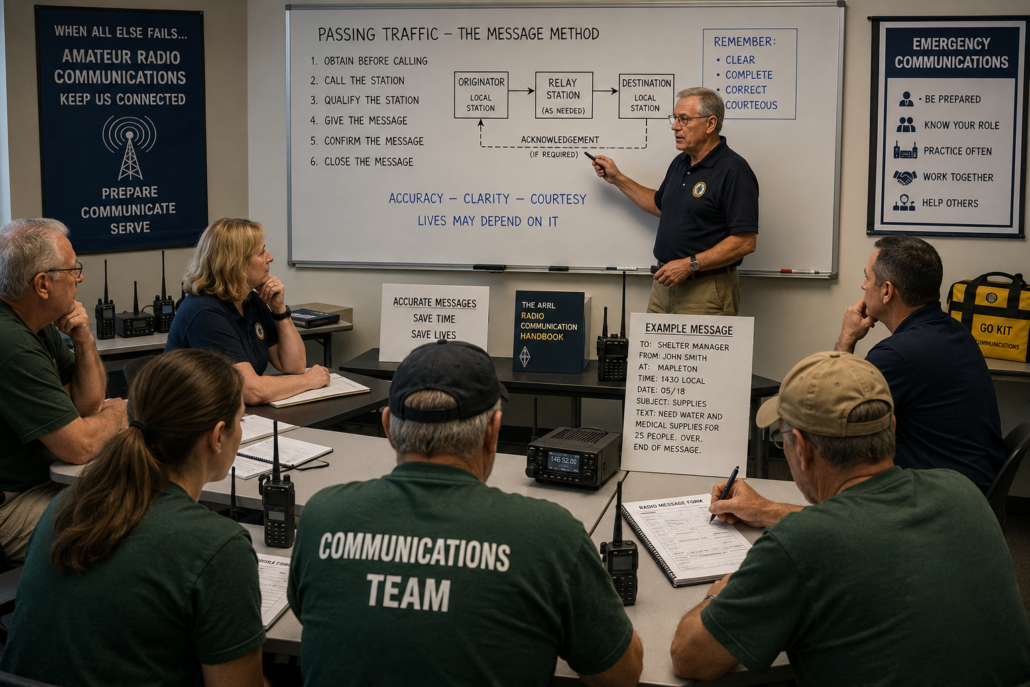
An amateur radio license provides legal operating privileges, but training transforms a licensed operator into a dependable communicator. Community service communications require more than knowing how to operate a radio. Operators must understand message handling, net procedures, equipment deployment, emergency power, safety, agency expectations, and professional conduct. Regular training builds competence, confidence, and trust. A well-trained amateur radio operator becomes more than a hobbyist—they become a reliable community asset capable of supporting public-service events, emergency response organizations, neighborhoods, churches, and local leadership when normal communications are disrupted.
BUILDING AND CREATING THE RIGHT EQUIPMENT
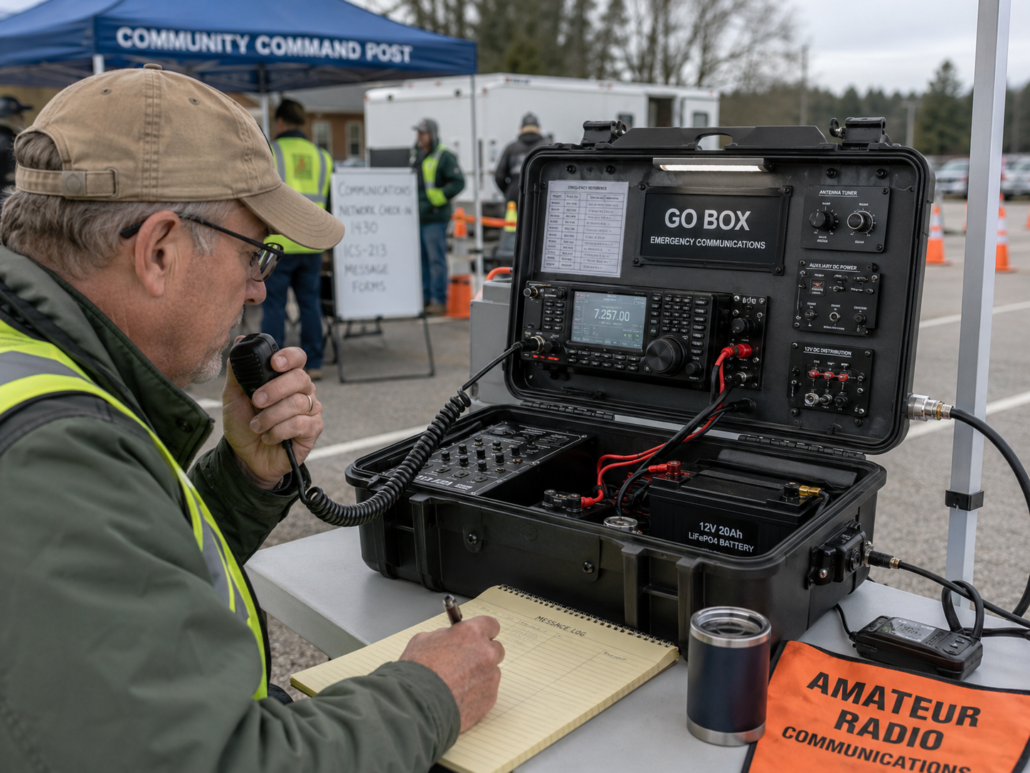
Effective emergency communication depends on more than owning a radio. Amateur radio operators must build and organize equipment that can be transported, deployed, powered, and operated under difficult conditions. A properly designed portable station combines reliable radios, adaptable antennas, independent power, protected cabling, essential tools, and clear operating documentation in a modular package. Portability allows an operator to serve wherever communication is needed—at a shelter, command post, hospital, neighborhood staging area, church facility, or remote field location. The best portable equipment system is not necessarily the most expensive or technically complex. It is the system the operator understands, can carry safely, can deploy quickly, and has repeatedly tested under realistic conditions.
PRACTICE, PRACTICE, PRACTICE DRILLS
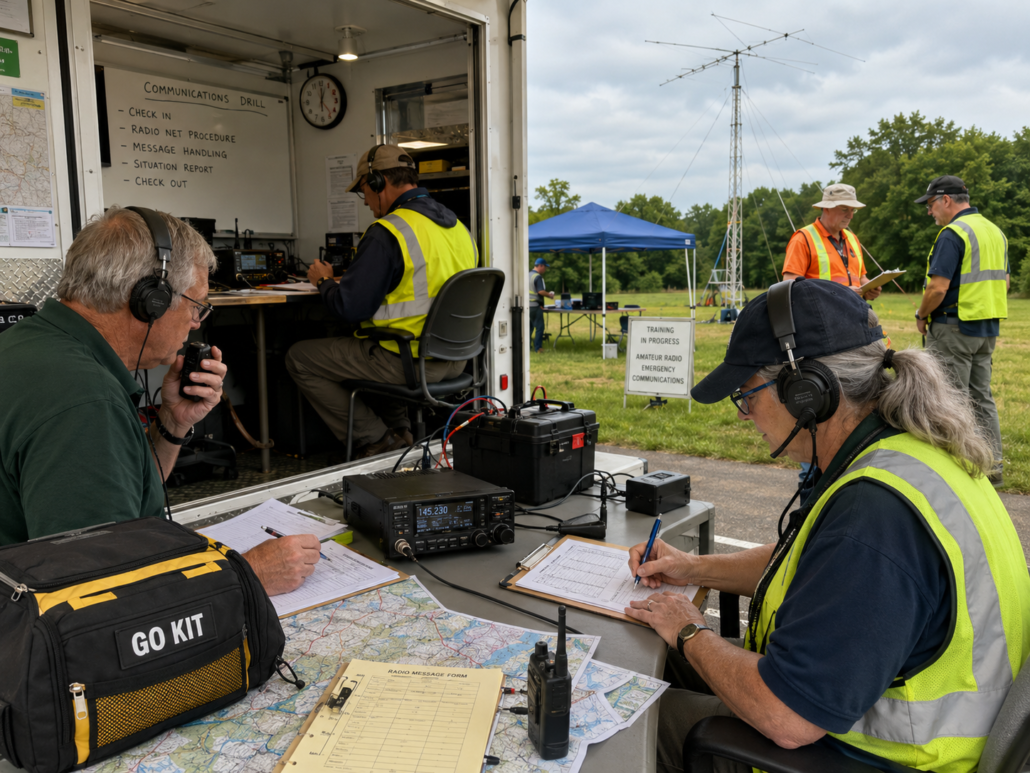
Quality training transforms an amateur radio operator from someone who owns communications equipment into someone who can be trusted when conditions become difficult. Effective training develops technical competence, operational discipline, sound judgment, teamwork, and confidence. During an emergency, there may be little time to consult manuals, correct preventable mistakes, or learn unfamiliar procedures. Operators who train regularly are better prepared to establish communications, pass accurate messages, solve equipment problems, and support community leaders without creating additional confusion. Quality training is therefore not simply preparation for an emergency—it is the foundation of dependable service.