
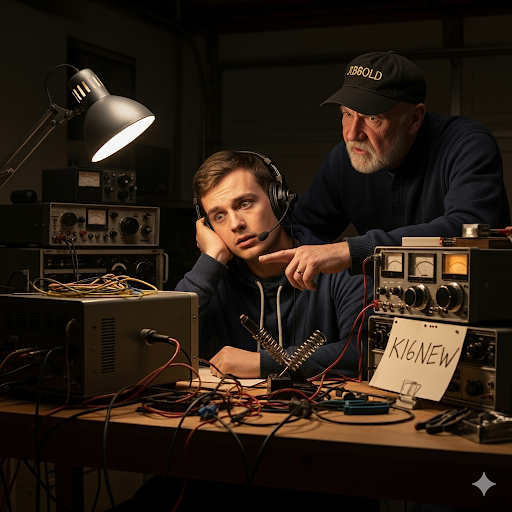
The Hidden Problem: Bullying New Amateurs in Ham Radio
Amateur radio has long been known as “the friendly hobby.” It connects people across borders, teaches valuable technical skills, and upholds a proud tradition of experimentation. However, beneath this positive image, a concerning issue has emerged: the bullying of new amateur radio operators who are just starting their journeys.
A Changing Hobby, A Learning Curve
Today’s amateur radio is more complex and diverse than it was even a decade ago. While Morse code and HF ragchews remain timeless, new operators now face a steep learning curve that includes:
- Digital modes like FT8, JS8Call, and VARA.
- Software-defined radios (SDRs).
- Advanced antenna modeling tools.
- Logging software, satellite tracking, and even amateur mesh networks.
Acquiring these skills takes time, encouragement, and mentorship. Unfortunately, many newcomers face impatience and even hostility instead of support. Those who act that way should consider retiring from the hobby.
Where the Bullying Happens
The bullying doesn’t always take the form of insults—it can be subtle:
- Dismissive attitudes toward repeaters or nets when a new operator makes a mistake. (Others will step in and help)
- Gatekeeping with comments like, “If you don’t know that already, you don’t belong on the air.” (Don’t comment back, just keep trying. Other amateurs may step in and shut down the gatekeepers)
- Harsh critiques of operating style, signal quality, or equipment choices. (They are better ignored)
- Exclusion from local clubs or online groups when a beginner asks “basic” questions. (Club mentors should step up and help)
These attitudes and behaviors discourage learning and drive potential lifelong hams away from the hobby before they’ve had a chance to find their footing.
Why Patience Matters
Every amateur, no matter how long they have been involved, once fumbled with a first QSO, mis-programmed a radio, or asked a question that now seems simple. The difference is that many of today’s new operators are learning in public—on forums, YouTube, and live nets—where criticism is amplified.
Ham radio has always thrived on mentoring. Elmering, the tradition of guiding new operators, is the foundation of our hobby. Without patience and support, we risk breaking that chain and losing the next generation of ham radio enthusiasts.
Building a Better Culture
To enhance amateur radio, experienced operators can:
- Take a moment before offering criticism. Provide corrections gently, explain your reasoning clearly, and encourage questions.
- Celebrate effort. Acknowledge someone for trying, even if the result isn’t perfect.
- Provide resources. Instead of dismissing inquiries, share links to tutorials, clubs, or documentation.
- Set a positive example. Show patience both on the air and online—others will be inspired to do the same.
– Remember where you started. Every Extra Class license holder was once a nervous Technician.
The Future Depends on Mentoring
If new operators feel unwelcome, they’ll walk away—and with them goes the future of amateur radio. Encouragement, mentorship, and patience will ensure that our bands remain vibrant, diverse, and innovative.
Amateur radio isn’t just about signals across the airwaves—it’s about building community. Let’s ensure that the community is one where everyone, regardless of their skill level, feels valued and supported.
Tips for Welcoming New Operators
- Listen first. Don’t jump on every mistake—allow space for learning.
- Use positive language. Say “Here’s a tip” instead of “You’re doing it wrong.”
- Share your story. Remind newcomers that you made the same mistakes many times.
- Be approachable. Invite them to nets, field days, or casual QSOs.
- Encourage experimentation. The spirit of amateur radio is one of trying, failing, and continually striving for improvement.
ABOUT THE AUTHOR:
Eric Werny, callsign WB6MTK, has dedicated more than six decades to the world of electronics and radio communications. With over 61 years of experience in electronics and 38 years in the professional two-way radio communications industry, Eric brings a depth of technical expertise and historical perspective rarely matched in the field.
His lifelong involvement in amateur radio began in his youth, sparking a passion that led to a distinguished career designing, maintaining, and advancing complex communications systems. Throughout his professional life, Eric has worked extensively with RF systems, infrastructure design, and advanced communications technologies, consistently focusing on reliability and innovation.
As both an amateur radio operator and seasoned communications engineer, Eric continues to advocate for the growth of the amateur service and the importance of technical education in the modern era. His writings reflect a unique blend of technical mastery, historical insight, and a genuine enthusiasm for radio as both a science and an enduring human connection.
— Eric Werny – WB6MTK