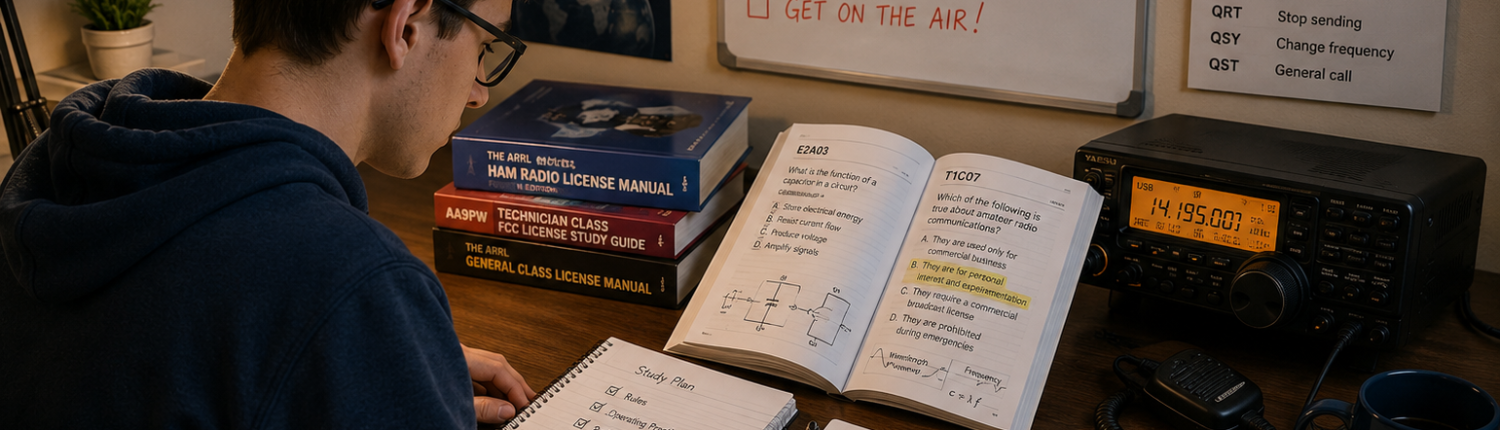
Should You Take Your Ham Radio License Exam Online or In Person?
Getting your amateur radio license is one of the most exciting first steps into the world of ham radio. Whether you are preparing for the Technician, General, or Amateur Extra license exam, one important decision comes before test day:
Should you take your ham radio exam in person or online?
Both options can get you licensed. The best choice depends on your comfort level, schedule, location, and how you prefer to learn and test. This guide compares the two testing paths so you can choose the option that gives you the best chance of success.
In addition, candidates who feel comfortable with remote learning may find that services such as Ham Radio Prep place study support and licensing resources in one location. Always verify current offerings, exam availability, and FCC/Volunteer Examiner requirements before relying on any specific provider.
At a Glance: In-Person vs. Online Ham Radio Testing
| Factor | In-Person Testing | Online Testing |
| Best for | New operators who want face-to-face support and local ham radio connections. | Candidates who need flexible scheduling or live far from a testing location. |
| Setup | Arrive, show ID, follow the VE team instructions, and take the exam. | Prepare a compliant room, webcam, microphone, internet connection, and screen sharing. |
| Community value | Strong. You may meet local hams, clubs, mentors, and repeater users. | Limited. The process is efficient, but usually less personal. |
| Convenience | Depends on local test dates and travel distance. | Often more flexible, with more evening and weekend sessions. |
In-Person Ham Radio Testing
In-person amateur radio license exams are typically hosted by local ham radio clubs, Volunteer Examiner teams, or radio organizations. For many new operators, this remains the most comfortable and encouraging way to take the exam.
Pros and Cons of Testing Environments
Why In-Person Testing Works Well
One of the biggest advantages of in-person testing is human support. Volunteer Examiners are physically present to explain the testing procedure, check your identification, answer basic pre-exam questions, and help you feel more comfortable before the test begins.
Another major benefit is connection. When you test in person, you often meet local amateur radio operators, club members, and other people who are starting the same journey. This can open the door to local repeaters, emergency communications groups, Field Day events, mentoring, and club activities.
For many new hams, the exam session is not just a test. It is the first real introduction to the amateur radio community.
Best reason to test in person: You do not just earn a license; you begin building your local ham radio network.
Possible Drawbacks of In-Person Testing
The main disadvantage is travel. You may need to drive to a club meeting, public library, emergency operations center, or other testing location. In rural areas, exam sessions may not be offered very often.
In-person testing may also be less flexible. Test dates are often scheduled around club events, ARRL testing sessions, or Volunteer Examiner availability. If your schedule is busy, you may have to wait longer for an open session.
Online Ham Radio Testing
Online amateur radio testing has become a useful option, especially for people who live far from a testing site or need a more flexible schedule.
Why Online Testing Is Convenient
The biggest benefit of online testing is convenience. You can often find exam sessions in the evening, on weekends, or much sooner than a local in-person exam. This is helpful if you are ready to test now and do not want to wait several weeks for a local session.
Online testing also allows you to take the exam from home or another quiet location. This can be ideal for people who live in remote areas, have transportation challenges, mobility concerns, or busy work and family schedules.
In many cases, online exam teams submit results quickly, which may help speed up processing and get you closer to receiving your FCC amateur radio call sign.
Best reason to test online: you may be able to schedule the exam sooner and complete the process without travel.
Possible Drawbacks of Online Testing
Online testing requires more preparation before the exam begins. You will need a reliable internet connection, a computer with a webcam and microphone, and sometimes an additional camera, such as a phone, to show the testing area.
The room must meet exam requirements. That usually means no papers, notes, radios, extra monitors, people, distractions, or clutter in the testing area. Some online Volunteer Examiner teams are very strict about the room setup.
You may also need to share your screen, verify your identity on camera, move the camera around the room, and follow detailed instructions before the exam starts. If you are not comfortable with video conferencing tools, this may add stress before the test even begins.
Online testing can also feel less personal. You may pass the exam, but you may not make the same local connections you would at an in-person session.
Which Ham Radio Exam Option Should You Choose?
Choose in-person testing if you want face-to-face support, prefer a simple testing setup, or would like to meet local amateur radio operators. This is often the best option for people who want to connect with a club, find an Elmer, learn about local repeaters, and become part of the ham radio community from the beginning.
Choose online testing if you are comfortable with technology, need a flexible schedule, live far from a testing location, or want to take the exam as soon as possible. This is a strong option for people who are confident using Zoom or similar video tools and can prepare a quiet, exam-compliant room.
Quick Decision Checklist
| Choose In-Person Testing If… | Choose Online Testing If… |
| You want face-to-face encouragement before the exam. | You are comfortable with video conferencing and screen sharing. |
| You want to meet local ham operators and clubs. | You need a faster or more flexible exam date. |
| You prefer fewer technology requirements. | You live far from a Volunteer Examiner test site. |
| You want to learn about local repeaters, nets, and activities. | You can prepare a quiet, exam-compliant room. |
Final Recommendation
If you are new to amateur radio and have a local exam session available, in-person testing is often the better first experience. It gives you personal support, introduces you to local operators, and helps you start building relationships in the ham radio community.
However, if distance, scheduling, health, or transportation makes in-person testing difficult, online testing is an excellent alternative. The most important thing is not where you take the exam. The most important thing is that you take the next step.
Your amateur radio license opens the door to emergency communications, public service, technical learning, worldwide contacts, digital modes, antennas, satellites, and a lifetime of discovery.
Whether you test online or in person, prepare well, stay calm, and move forward.
The airwaves are waiting.