
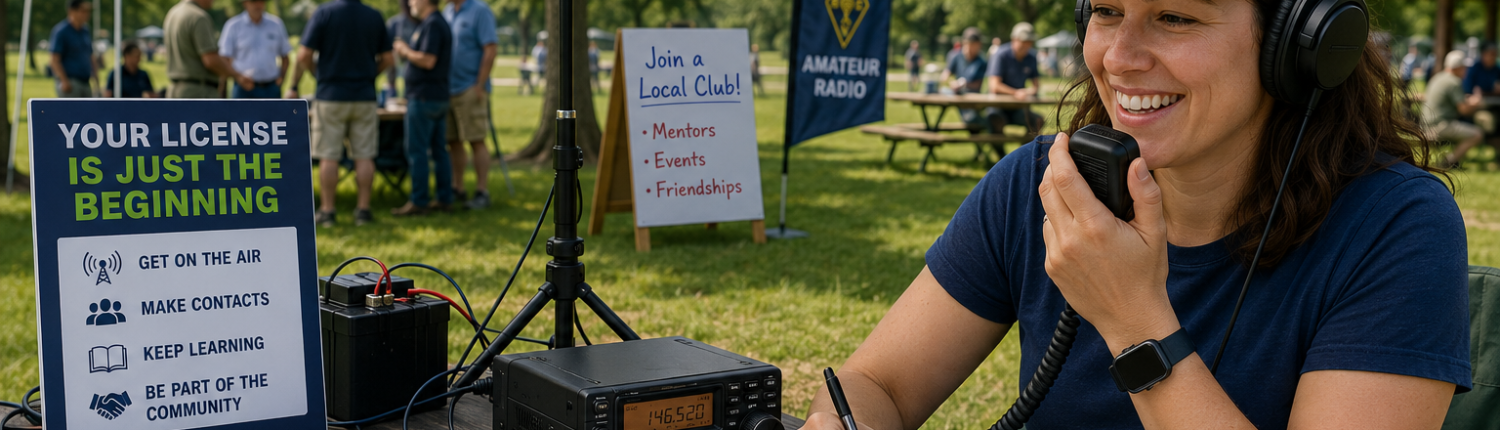
Your Licensed! Where Do We Go From Here
1. Once you know you have passed your test, it is time to design your shack configuration and antenna system. Many times, the simple handheld radio will be your starter set, then, over time, with piggy bank amplification technology (savings to your radio fund), you’ll have enough to improve your situation.
May I suggest you read this article on our site called: Ham Radio How Much Does It Cost
1. Once you receive your e-mail from the FCC with a link to the PDF of your license, print it out and hang it where you’re proud to hang it.
2. Print out a copy of what is call the Band Plan to reference the privileges of your license class: Technician, General, or Amateur Extra.
3. Once you know you have passed your test, it is time to design your shack configuration and antenna system. Many times, the simple handheld radio will be your starter set, then, over time, with piggy bank amplification technology (savings to your radio fund), you’ll have enough to improve your situation. Buy your first radio based on what you actually want to do, not just what looks impressive. May I suggest you read this article on our site called: Ham Radio How Much Does It Cost.
4. Program local repeaters into your radio. We suggest you use this Repeater Guide To Help You. You can also check your local Amateur Radio Clubs website for their repeater frequencies. In addition, learn how to use repeater offsets, PL tones, CTCSS tones, and basic channel programming.
5. Learn basic operating skills. Listen first before transmitting so you understand local operating habits. Suggest article – Best Operating Skills
6. Practice saying your call sign clearly and confidently. Learn the phonetic alphabet and use it correctly when needed. Example: my call = “Whiskey Bravo Six Mike Tango Kilo” WB6MTK.
7. Learn basic on-air etiquette so you sound professional and respectful. Remember, you’re new to the pond, and there are some sharks. Just thank them for their advice and keep going.
8. Join a local amateur radio club. Here is where you find an experienced operator, often called an “Elmer,” who can help you get started.
9. Ask a Ham buddy to help you make your first contact. Microphone fright is normal, but you’ll do great.
10. Participate in local nets to build confidence. Do not be afraid to say, “I am newly licensed.” Most good operators will be glad to help. Try a check-in net, weather net, emergency communications net, or club net. Understand the difference between simplex and repeater operation.
11. Keep a simple station log, especially while you are learning. Practice simplex communication with another local operator. Learn which frequencies are commonly used in your area.
12. Explore emergency communications and how amateur radio supports public service.
13. Explore different areas of amateur radio, such as satellites, digital modes, contesting, CW, HF, antennas, public service, and emergency communications.
14. Consider joining organizations such as ARRL, ARES, RACES, local emergency communication groups, or specialty radio clubs.
Don’t be overwhelmed by the length of the list. We all have been through it, and it kinda fun to learn and build amazing friendships over the years.